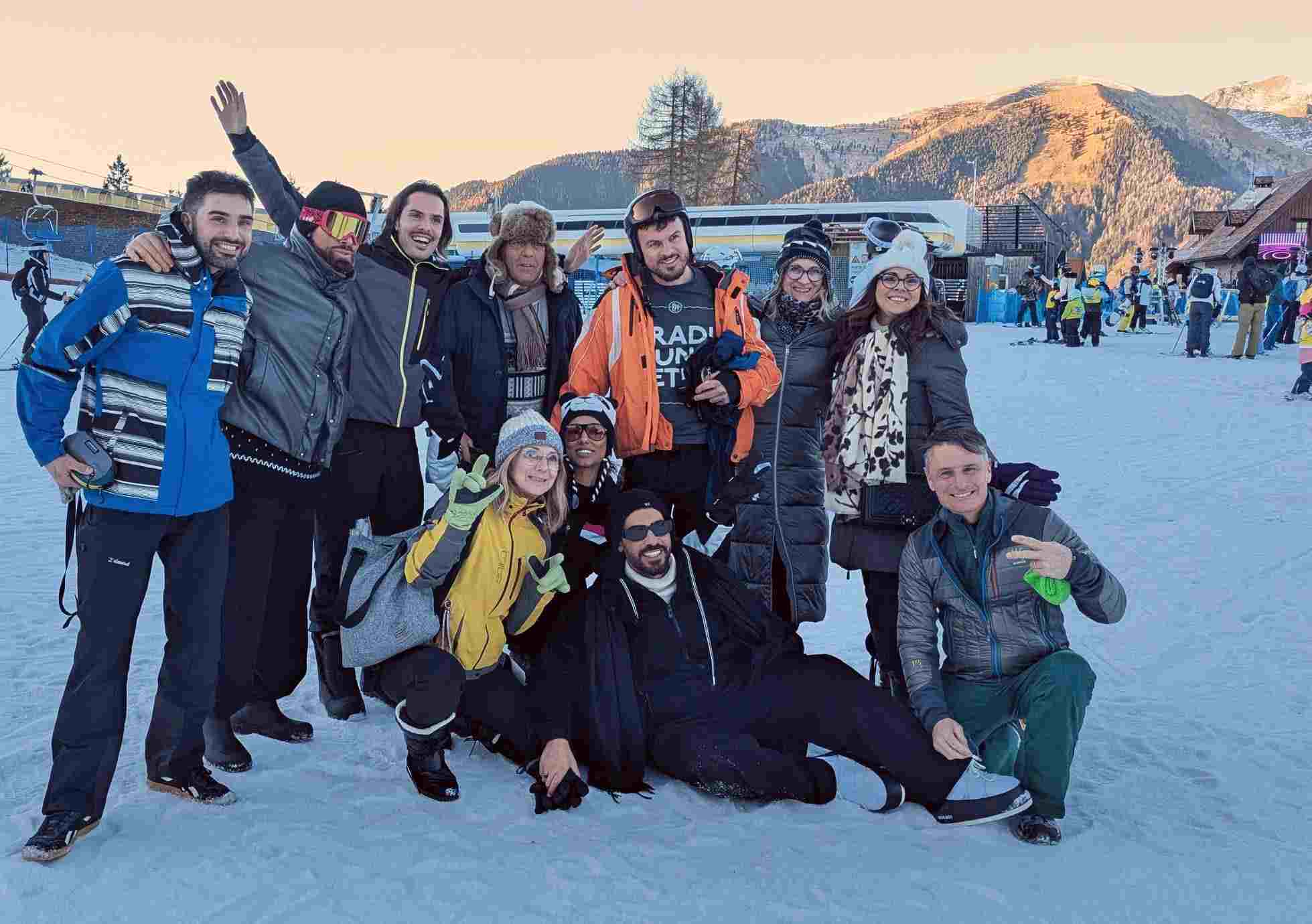
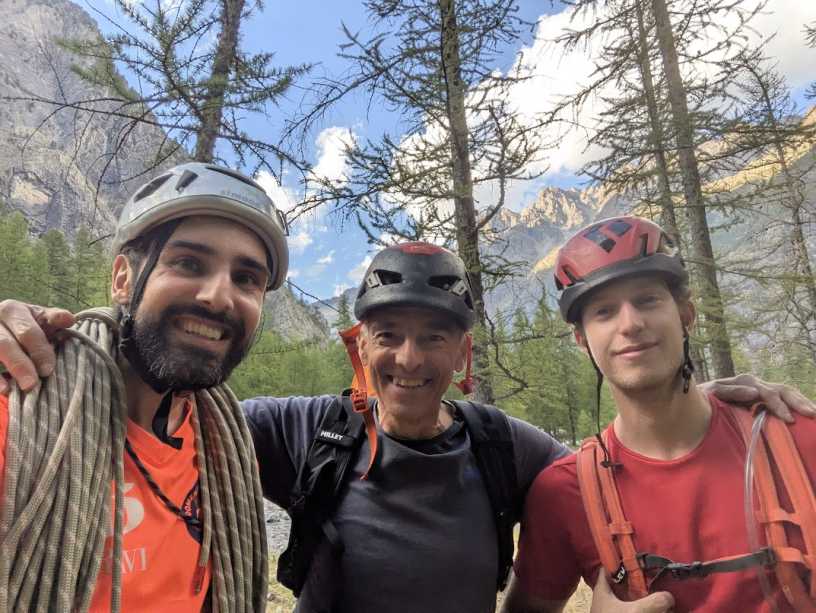
Climbing with my friends in Ailefroide
Here is a collection of interesting books.
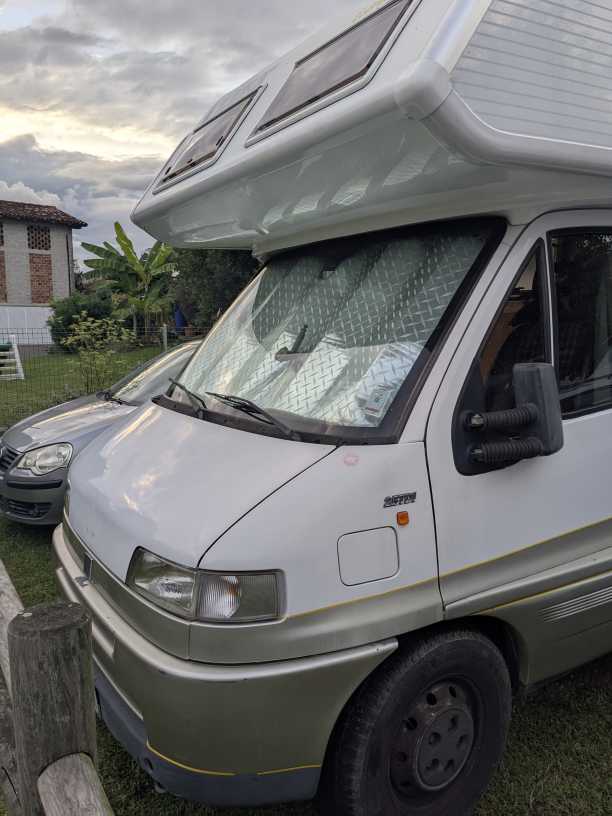
In 2023 I bought a very old camper, roughly 30 years old. It took me an infinite amount of time to understand, repair, renew, and install new stuff. In return, it gave me so much fun and exploration. It's powered by a 2.5L TD SOFIM engine from '96: very smoky, but very reliable.
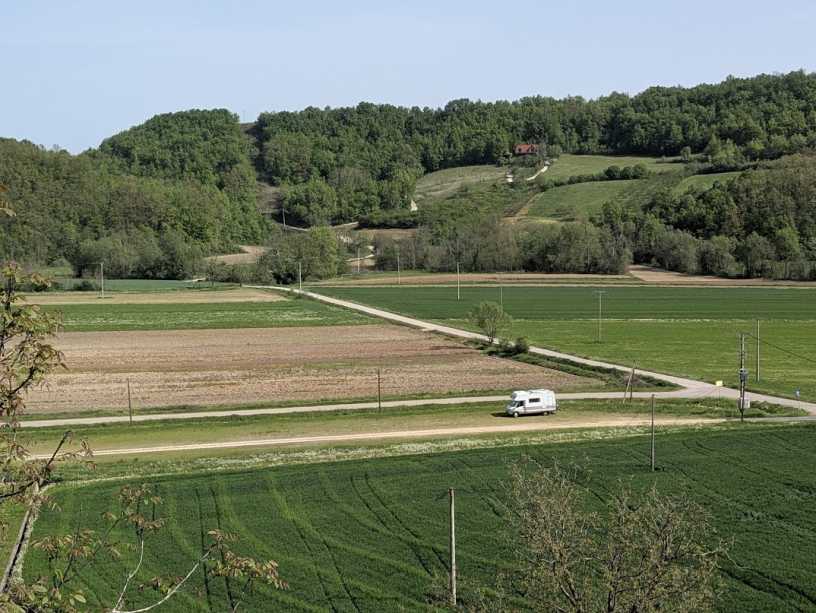
I recently installed a 450W solar system + MPPT charger, and at the same time, I renewed the old electrical system. I then installed a new Vevor heater (thanks god with a built in altitude adapter for the diesel feedline) and a battery monitor myself. Another mod is the motirized entrance step: to reach "c" speed I used electroactuated switch, with large section wire, taking in 250W. Here is the beast. My vehicle parked in Bosnia.
(Gen. 26 edit) I modified the electrical system again. I used and old PWM battery charger + 120W x 2 solar panels to feed the engine battery. It will start no matter what. I installed high output usb-c PD chargers, one of which has an integrated voltmeter to check the engine voltage (Amazon).
(Jun. 26 edit) I'm currently installing a cb-radio to be able to communicate. I'm making sure the external antenna has SWR=1, so all 4W will go on air.
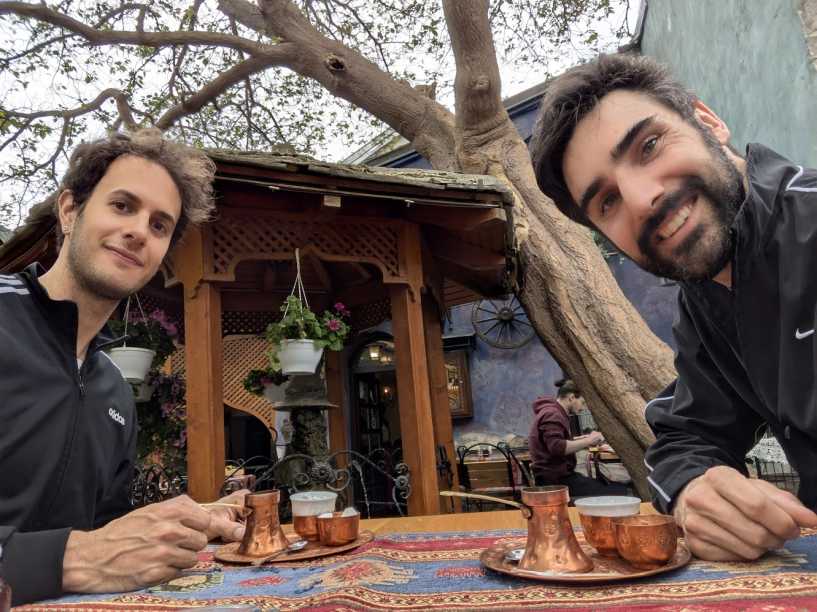
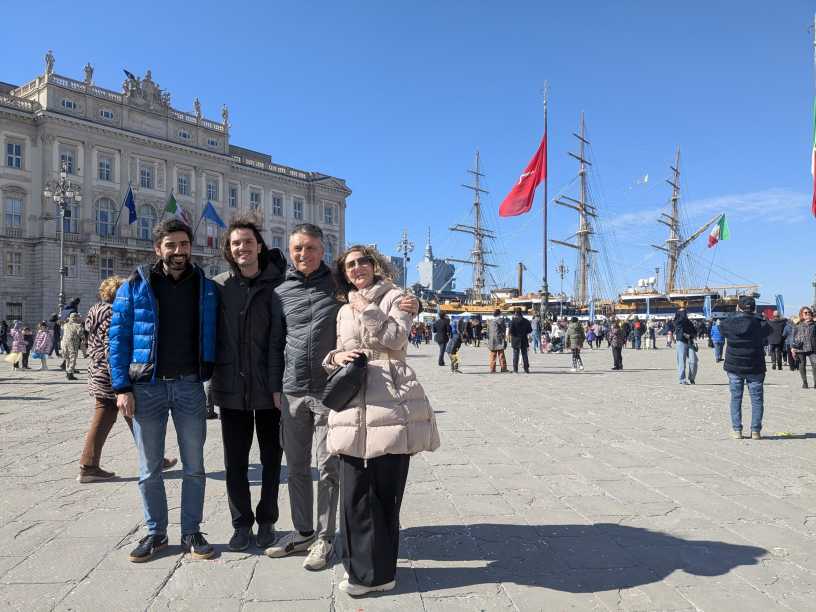
Good old friends (Mostar)
If you're interested in Diesel heaters as I am, you may have a look at www.letonkinoisvarnish.co.uk. This amazing website is the best reference on Eberspacher diesel heaters. It is managed by Roy Murkin, a retired electronics engineer who knows more than you'll believe about Eberspächers. While digging into and troubleshooting my heater, I got in contact with him and had a very deep and interesting conversation full of tips.
Car-wise I followed my philosophy to look for a versatile yet sturdy car for daily use. The choice fell for a 2017 1.6 tdi Octavia. Honestly it has been a great car so far.
Very happy moments in Norrköping
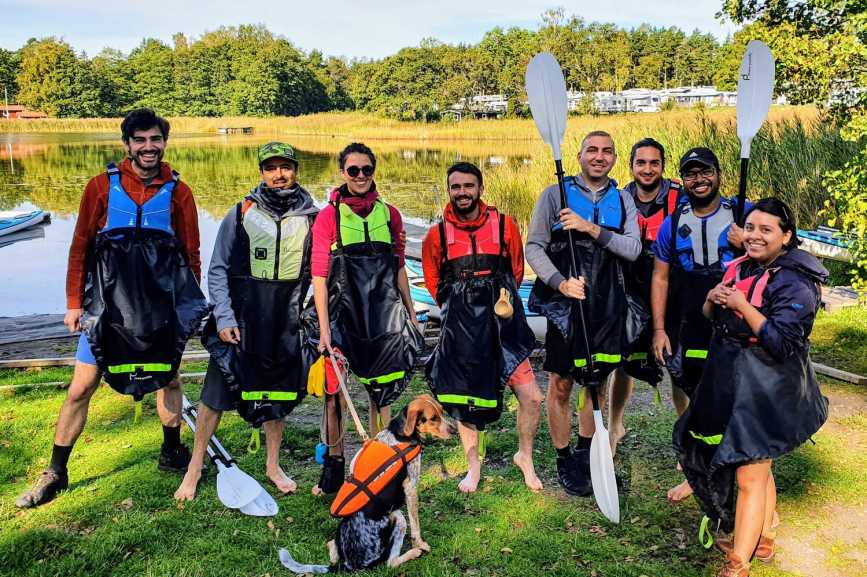
Kayaking in the archipelago
I became fascinated by this hobby when my dad randomly bought a machine. A metal detector works based on electromagnetic induction. A coil transmits energy (a magnetic field) which makes the electrons in the metal oscillate. As each accelerated charge radiates, some energy is reflected back to the receiver's coil. The machine then senses this reflected wave.
Usually, VDI and depth data are shown. VDI is a number dependent on the metal's nature (technically its conductivity); since the freer the electrons are, the better they oscillate in anti-phase with the transmitting signal. Depth data, I believe, is estimated by the delay in signal reception.
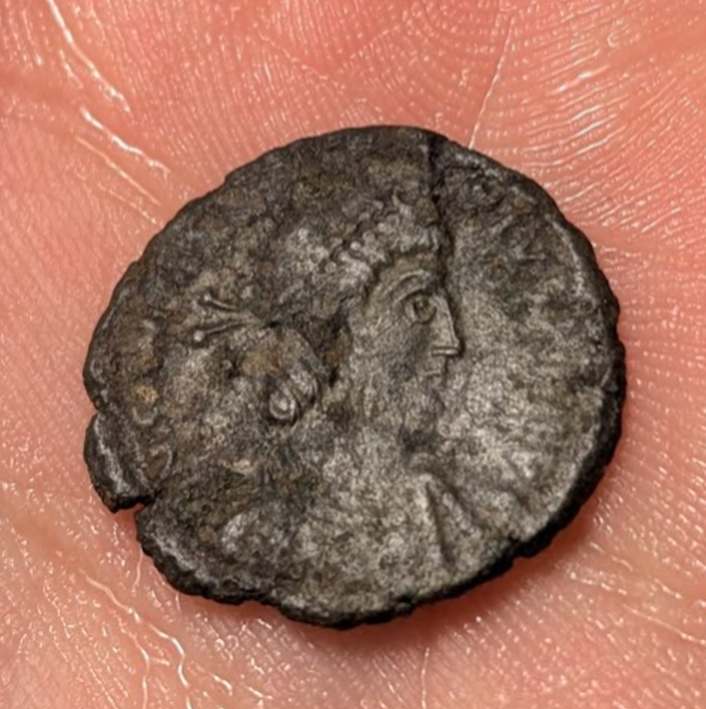
Roman coin I found, ca 300 AD. Depth 3 inches, VDI ca 56.
Hi, I'm IV3LKS. For radio- related stuff mail me at IV3LKS AT proton.me
Radio - communication, for me, represents a fascinating fight between nature and science, to connect people. In hf, the magic happens: with reasonable size antennas you are able to make your propagating waves reflected from the ionosphere, one or multiple times, and reach unbelievable distances.
My radio is a Xiegu g90, a portable with integrated tuner and waterfall display. In terms of selectivity is fascinating: it's very easy to catch SSB communications from all over Europe / big guns from Russia and once I gor Canary islands and Israel.
Antennas: the first antenna I made was just a random wire on a tree, but in a short time I realized balanced antennas (expecially inverted V dipoles) are performing better. Using FT8, a digital mode, I've been able, in a month of use, to get a signal from Sydney (-20db, 100W, motorized home made delta loop). I'm mainly using a hygain 12avq 3-bands vertical, with a radial resonant plane. Works quite good and I managed to connect New Zeland with only 1.4 Watt. For longer wlens I have a self built Morgain.
I'm currently experimenting in digital modes (RTTY, FT8, FT4, Olivia) to test my home made antennas, I also recently tested RNNoise AI neural network denoiser to clean voice in SSB and for strong signals it reduces ear fatigue.
A special thanks to Roberto IN3BFW for his special mentorship. From the beginning of my activity I got so much help and inspiration, plus a bunch of parts and antennas to test.
On HF the ionosphere is a changing mirror of charged particles: its density shifts with solar activity, time of day and season. Key concepts:
FT8 handles weak signals: 13-second bursts with super-compact messages (callsigns, locator, report) plus forward error correction.